
Understanding Aircraft Jacks: Tripod vs. Axle Jacks
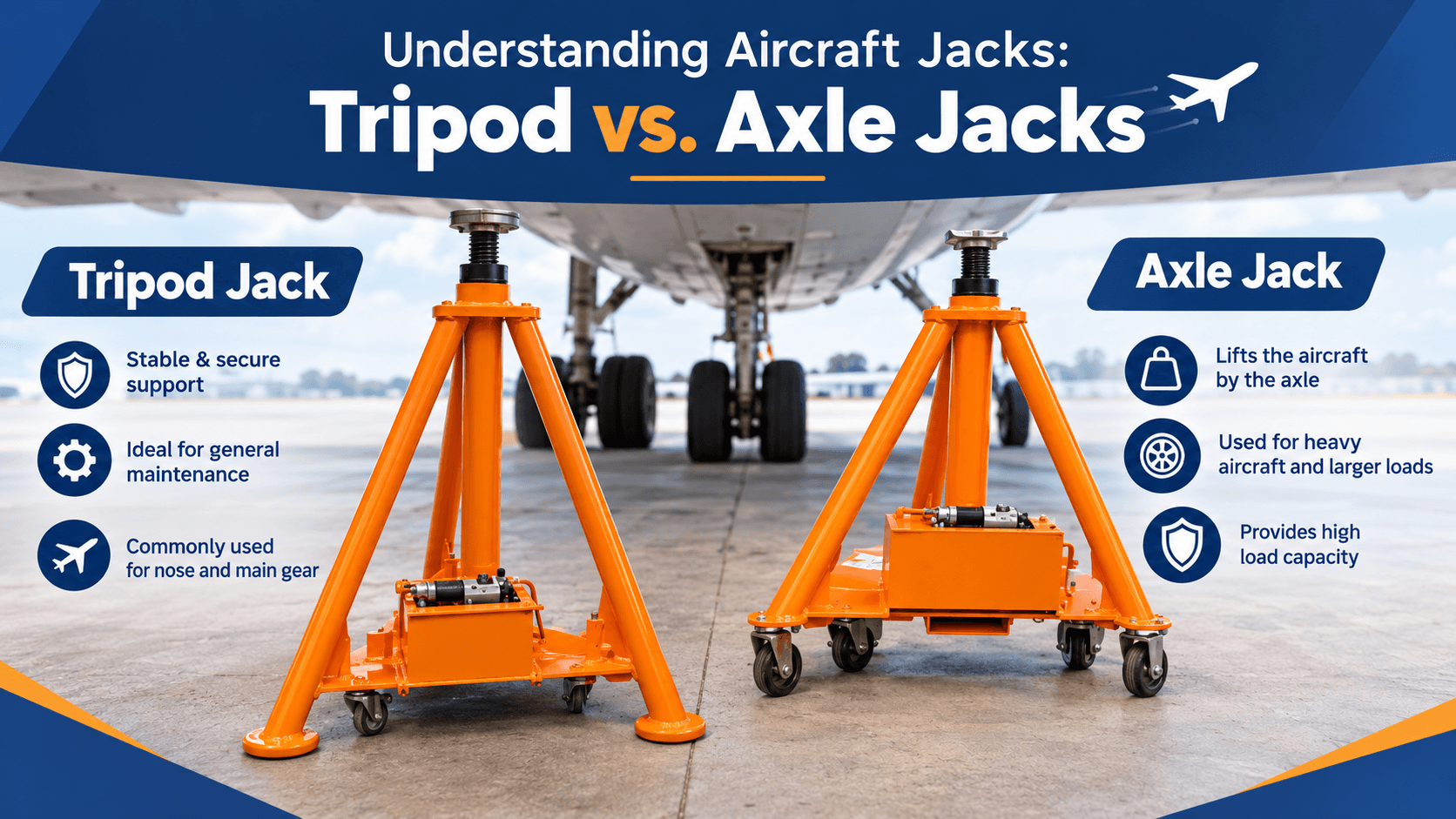
Proper aviation ground support equipment (GSE) is essential to fleet safety, regulatory compliance and effective hangar operations. High capacity aircraft jacks are among the most important pieces of equipment in any aviation maintenance facility. During maintenance – from routine landing gear checks and tire changes to major structural overhauls – the stability and safety of the aircraft are guaranteed by reliable, precision-engineered jacking systems.
GSE-R-US (Jetall) provides aircraft tripod jacks, axle jacks and lifting equipment to commercial airlines, business aviation, cargo fleets and military defense built to the highest industry requirements.
The suitable lifting method to use is dependent upon the repair work to be performed, the aircraft gross weight and the aircraft structural jack points:
1. Aircraft Tripod Jack
Tripod jacks are made for heavy-lift operations, structural upkeep and complete aircraft lifting. Located at specific fuselage and wing jacking points, they lift the entire aircraft off the ground to enable for full extension and retraction tests of the landing gear systems.
- High Tonnage Capacity: Engineered to safely handle regional jets, narrow body commercial aircraft, and broad body freighters.
- Safety Lock Collars: They have mechanical threaded lock nuts to prevent accidental lowering in case of lack of hydraulic pressure.
- Precision Hydraulic Rams: Single and multi-stage telescoping rams provide smooth controlled lift and descent.
2. Axle hydraulic jacks
The axle jacks are small, very mobile lifting tools that are made for rapid, specific repair work on the ramp or in the hangar.
- Landing Gear Maintenance: Ideal for quick tire, wheel and brake service without lifting the complete airframe.
- Low Clearance Profiles: Engineered to readily fit under the low-slung axles and landing gear assemblies of aircraft.
- Towable & Portable Designs Heavy duty casters and towing handles make it easy to maneuver across tarmac surfaces.
Important Safety Procedures for Aircraft — Jacking Operations
When jacking an airplane it is imperative that safety standards and manufacturer procedures are followed to preserve the airframe and the safety of the mechanic.
1.Pre-Operation Equipment Inspection
Check hydraulic lines, ram surfaces, fluid levels and mechanical locking collars for leaks, wear or structural damage before installing under aircraft.
2.Check Ground & Aircraft Parameters
Park the aircraft on a level, reinforced concrete floor. Remove wheel chocks. Release parking brakes. The weight/center of gravity of the aircraft must not exceed the capacity of the jack.
3.Positioning and controlled extension
Align the jack pad precisely over the aircraft jacking points. Ensure that the hydraulic pump is engaged uniformly at all jacking stations to keep the aircraft level during ascent.
4.Activate Mechanical Safety Locks.
As soon as the proper height has been reached, quickly screw down the mechanical safety lock nuts to mechanically secure the load before work is carried out underneath technicians.
Why GSE-R-US for aircraft jacking solutions?
- Heavy-duty construction: Jacks are constructed from heavy-gauge structural steel and are tested for use in tough hangar and flight line environments.
- Full Range: We support narrow-body, wide-body and rotary-wing aircraft models, from small 5-ton axle jacks to high-capacity 100-ton tripod jacks.
- Full GSE Support: Along with aircraft jacks, we offer a complete line of ground support equipment including Ground Power Units (GPUs), towbars and servicing carts.
Conclusion: Elevate Your Fleet Maintenance Standards
Investing in certified, high-performance aircraft jacks is fundamental to operational safety, minimizing downtime, and protecting valuable aviation assets. Partner with trusted GSE specialists who understand aircraft lifting requirements inside and out.
Looking to upgrade your hangar’s jacking systems?
Explore our complete range of hydraulic tripod and axle jacks today. Visit the official Jetall / GSE-R-US Aircraft Jacks Catalog to view technical specifications, request a custom quote, or speak with an aviation equipment expert!
